 Back to Blog
March 20, 2026
5 minutes read
Brand Campaign vs Marketing Campaign: What's the Difference and When to Use Each
Do you establish your brand first or have a campaign that gives you instant results? How do you know what is most important? The two are closely related but have completely different functions:
- A brand campaign influences your image and how people recognize you over time.
- A marketing campaign is centered around getting a business target within a given time frame and is profitable
Let us explain each type and the primary difference between a brand campaign and a marketing campaign.
What is a Brand Campaign?
A brand campaign is designed to strengthen the identity, values, and emotional connection people have with a company. The main goal is to build recognition, trust, and loyalty over time. Marketing experts at TopMessage note that brand campaigns are less about immediate sales and more about shaping a company's long-term perception.
Key characteristics of a brand campaign:
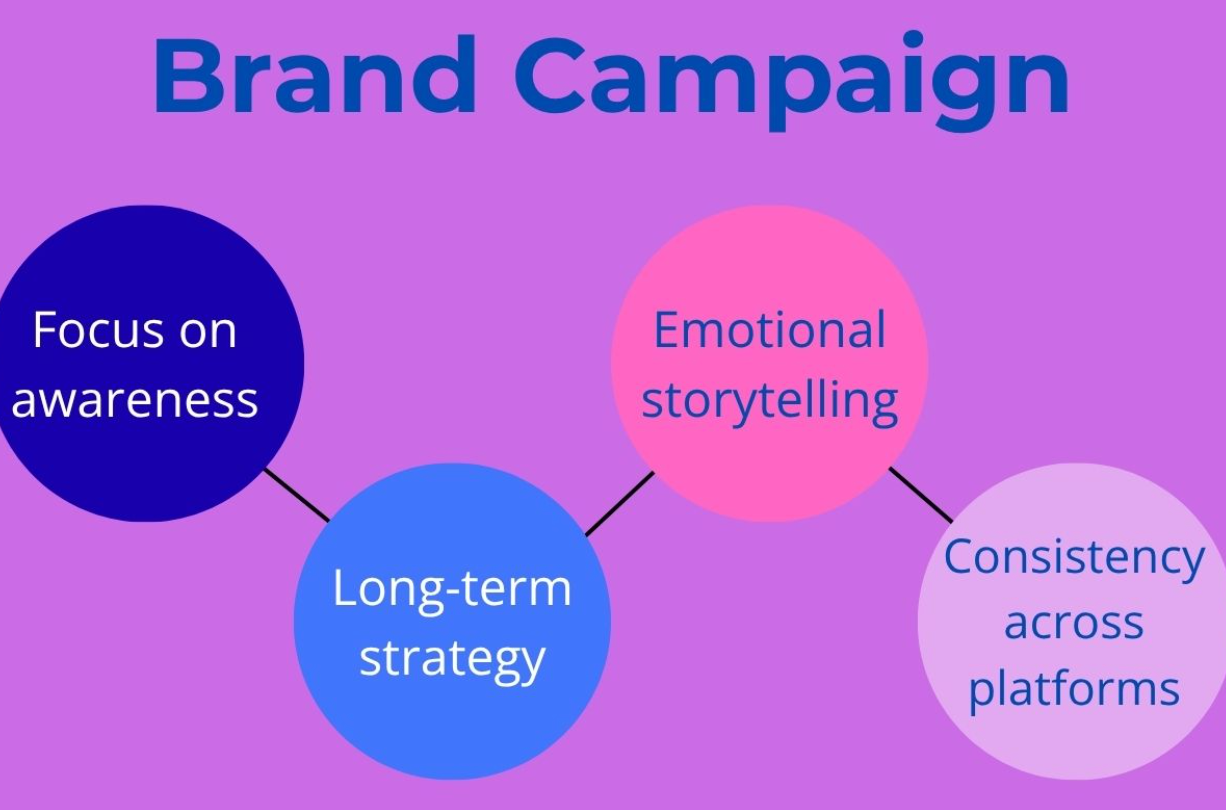
- Focus on awareness: It ensures people know who you are and what you stand for.
- Long-term strategy: The effects unfold over months or even years.
- Emotional storytelling: Campaigns often highlight the company’s purpose, values, or mission.
- Consistency across platforms: Messaging aligns with ads, content, and brand assets.
For example, Nike’s famous “Just Do It” campaign wasn’t about selling one pair of sneakers; It was about creating a movement that positioned Nike as the brand for determination and achievement.
Brand campaigns are essential for shaping how people feel about your company. Also, these are important for building a foundation of trust that drives long-term growth.
What is a Marketing Campaign?
A marketing campaign is more tactical and goal-driven. It aims to achieve measurable results such as increased sales, sign-ups, or leads within a defined period.
Key characteristics of a marketing campaign:
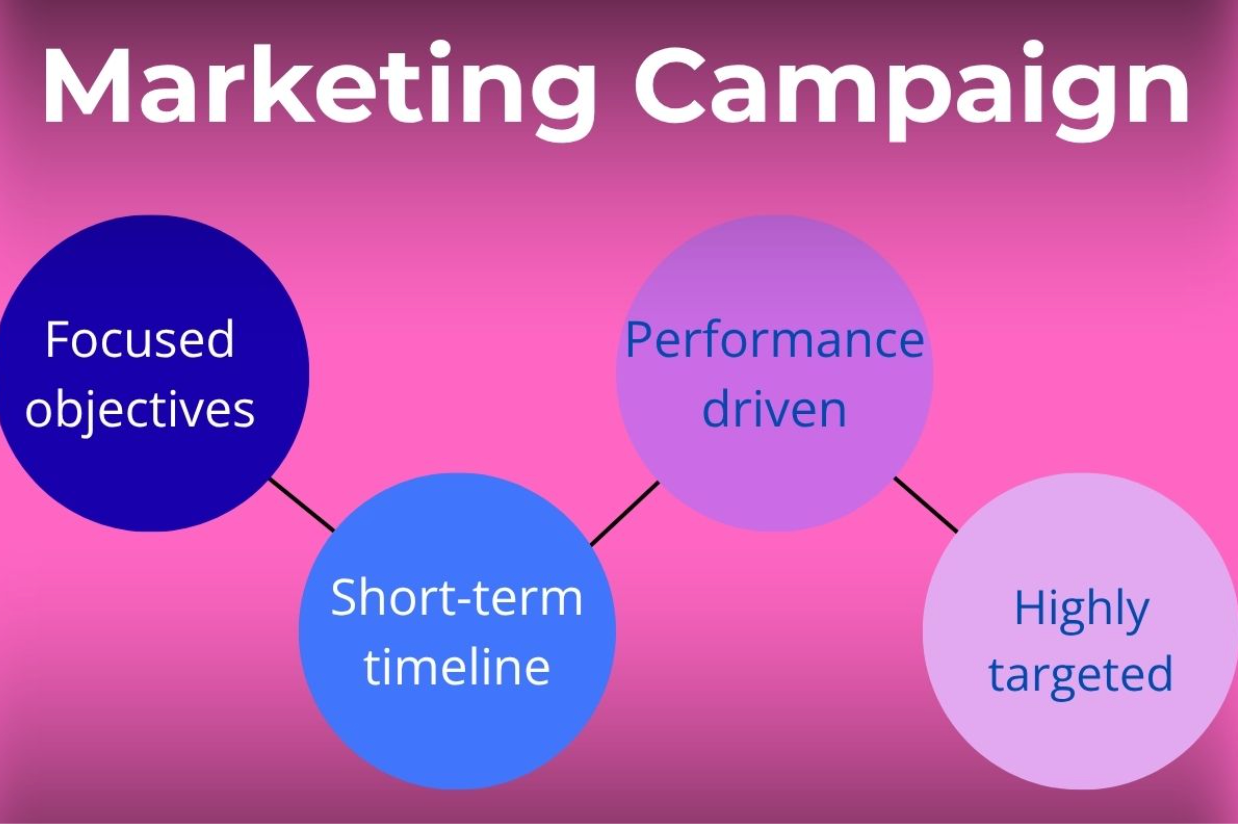
- Focused objectives: Whether it’s boosting holiday sales or promoting a product launch, there’s a clear call to action.
- Short-term timeline: Usually runs for days, weeks, or a few months.
- Performance-driven: Success is measured through metrics like conversions, ROI, and click-through rates.
- Highly targeted: Messages are personalized for specific customer segments.
A good example is a limited-time 20% discount campaign for an e-commerce store. This is a classic marketing campaign. Its primary aim is not brand awareness but quick sales. Marketing campaigns are vital for driving action and delivering immediate business results.
Brand Campaign vs Marketing Campaign
1. Purpose
- Brand Campaigns primary focus is building awareness. They are slowly and gradually building brand recognition and trust.
- While Marketing Campaigns also focus on building awareness, it is more of a strategic approach to drive and encourage action through sales, account signups, or inquiries and leads.
2. Time Frame
- Brand Campaign: Long primary focus, at times it can go on for months or even years at the time.
- Marketing Campaign: Short primary focus, this approaches usually spans a few days to a few months.
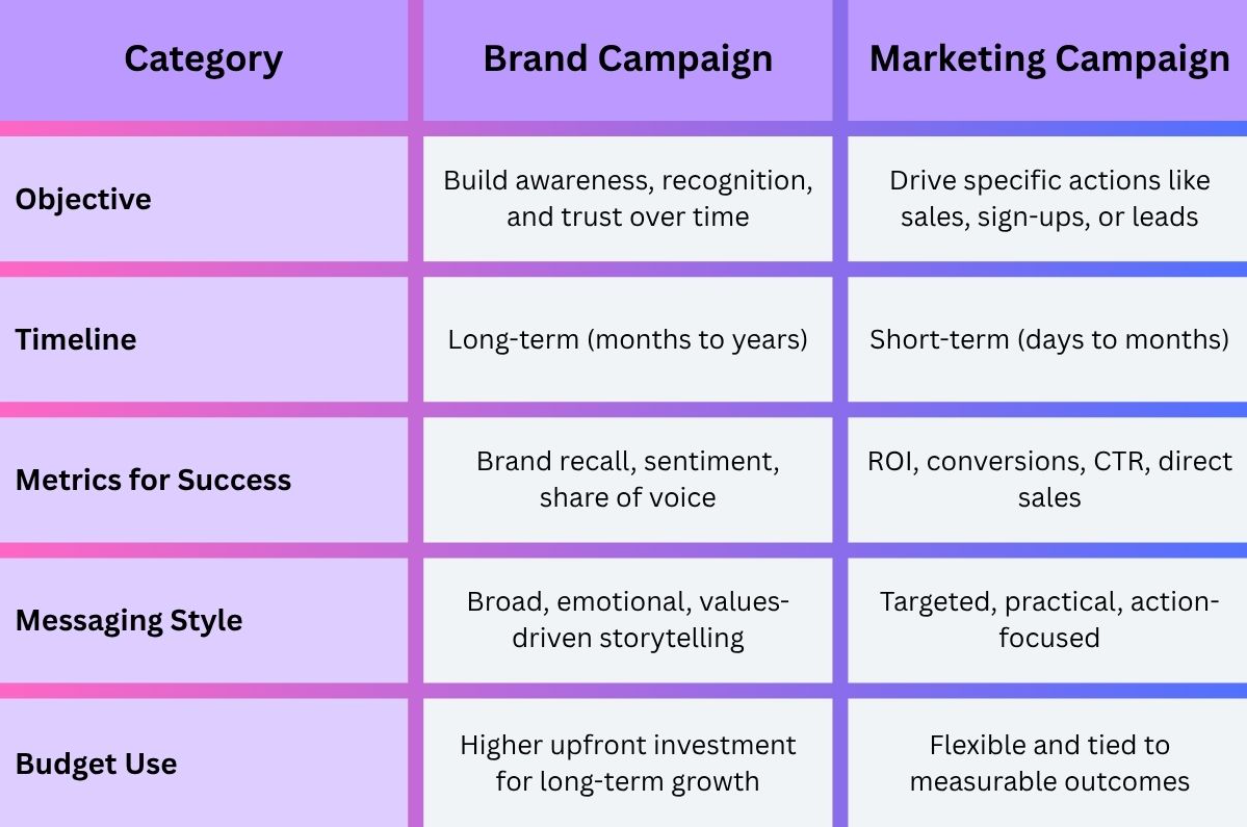
Overall, strategy-wise, brand campaigns focus on reputation, while marketing campaigns focus on driving immediate results. The effective use of marketing campaign strategy and principles means that brand strategy is not compromised in the long term, even with short-term campaigns running sequentially in a calendar.
When to use a brand campaign
Your business needs to prioritize a brand campaign when your company needs to:
- Introduce themselves to the market: New businesses have to primarily establish who they are.
- Do a rebrand or reposition: A brand campaign is essential when changing direction or image.
- Stand Out In A Crowded Space: If competitors have a bulk of the attention, branding helps cut a different fabric in the market.
Build Trust For The Long Term: Credibility is critical in a number of industries, such as finance, healthcare, and tech.
When to use a marketing campaign
Many brands are adopting digital channels such as WhatsApp marketing campaigns, which allow brands to instantly engage with customers' personalized communication while maintaining long-term brand awareness.
- Building campaigns on the foundation: Without strong brand equity, marketing campaigns often feel less effective or even empty.
- Leveraging value in a marketing campaign: A company with strong brand recognition will convert marketing campaigns more effectively.
Incorporating marketing and brand advertising together provides equilibrium, as while branding will expand the scope of your business over the long term, short-term revenue is gained from the marketing-specific campaigns.
An individual marketing campaign, especially SMS (text), works very well for advertising flash sales and for barraging customers to take immediate action, as well as quantifying short-term results.
For instance, Apple is an exemplary branding company, in advertising its values on innovation and design, and, meanwhile, they very well orchestrate marketing campaigns directed at the new iPhone product launches, to encourage immediate sales through SMS.
Integration of Brand Positioning with Marketing Communications
When the choice or necessity arises between brand campaigns and marketing campaigns, i.e., advertising, the best option is to lose neither, but to implement both in their entirety.
- Brand campaigns build the foundation: In the absence of brand equity, without any marketing campaigns, the results from the efforts will simply feel to be a total waste.
- Marketing campaigns leverage brand value: It is A company that has efficient branding is more likely to have more beneficial results.
By being part of the marketing efforts, the campaigns create equilibrium. Marketing generates immediate results, while growing the brand equity offers long-term sustainability.
There is a combination of advertising where many brands now incorporate SMS marketing, as they generate a balance between short-term marketing goals and long-term brand marketing goals.
Common Mistakes to Avoid
When working with these campaigns, businesses often fall into traps:
- Confusing the two: Expecting immediate sales results from a brand campaign leads to frustration.
- Neglecting branding: Focusing solely on short-term marketing goals without building brand awareness can bring quick wins but weak long-term loyalty.
- Over-investing in one type: Balance is key. Too much brand focus without conversion goals—or too much short-term marketing without brand building—limits growth.
Conclusion
So, the difference between a brand campaign and a marketing campaign is that a brand campaign shapes long-term identity, awareness, and trust. On the other hand, a marketing campaign drives immediate, measurable actions. Both are vital, but their effectiveness depends on timing, goals, and how well they work together.
You shouldn’t view these campaigns as rivals. Instead, use brand campaigns to set the stage and marketing campaigns to seize opportunities. Align them with your business objectives, and you’ll create a powerful, sustainable growth engine. You could ask yourself, “Do I need to build recognition or drive results right now?” The answer will tell you whether to run a brand campaign, a marketing campaign, or, ideally, both in synergy.
FAQs
What is the main difference between a brand campaign and a marketing campaign?
A brand campaign focuses on long-term awareness, identity, and trust, while a marketing campaign drives immediate actions like sales, sign-ups, or leads. Brand campaigns shape perception while marketing campaigns deliver measurable short-term results.
Can a business run both a brand campaign and a marketing campaign at the same time?
Yes. The most successful companies combine both. Brand campaigns build recognition and trust, while marketing campaigns capitalize on that trust to drive conversions and revenue.
When should I run a brand campaign?
Run a brand campaign when launching a new business, rebranding, entering a competitive market, or strengthening long-term trust and loyalty. It’s best used to shape how people perceive your brand.
When is a marketing campaign more effective?
Marketing campaigns work best when you need immediate results, like boosting sales, promoting new products, or generating leads. They are ideal for time-bound goals and performance-driven outcomes.
Do brand campaigns lead to sales?
Indirectly, yes. Brand campaigns don’t aim for instant purchases, but they build awareness and trust that make future sales easier and more profitable. Strong branding increases conversions in later marketing efforts.
Why is a combined approach important?
Using both ensures long-term growth and short-term results. Branding lays the foundation for trust and loyalty, while marketing activates customer interest and drives measurable actions.
How do brand and marketing campaigns support each other?
Brand campaigns create recognition and emotional affinity. Marketing campaigns leverage that recognition to generate conversions. Together, they reinforce customer loyalty, improve ROI, and fuel consistent growth.