 Back to Blog
Cloud telephony powers business communications seamlessly. It supports customer service, automated notifications, remote call centers, and even bulk text message campaigns. For those wondering how cloud telephony operates, understanding the principles is essential, especially in today’s fast-connected, competitive surroundings.
What Is Cloud Telephony and How Does It Actually Work?
What is cloud telephony? Think about the old-fashioned phone systems. It moves those outdated systems to the cloud. It is the telephony system’s cloud infrastructure. Customers will not have to deal with huge hardware systems and the cumbersome maintenance of on-site PBX telephony systems. Customers will not have to deal with telephone wire systems or hardware. Customers will not have to deal with systems to maintain. Customers will have the systems kept in the cloud so that the services can be delivered easily and promptly.
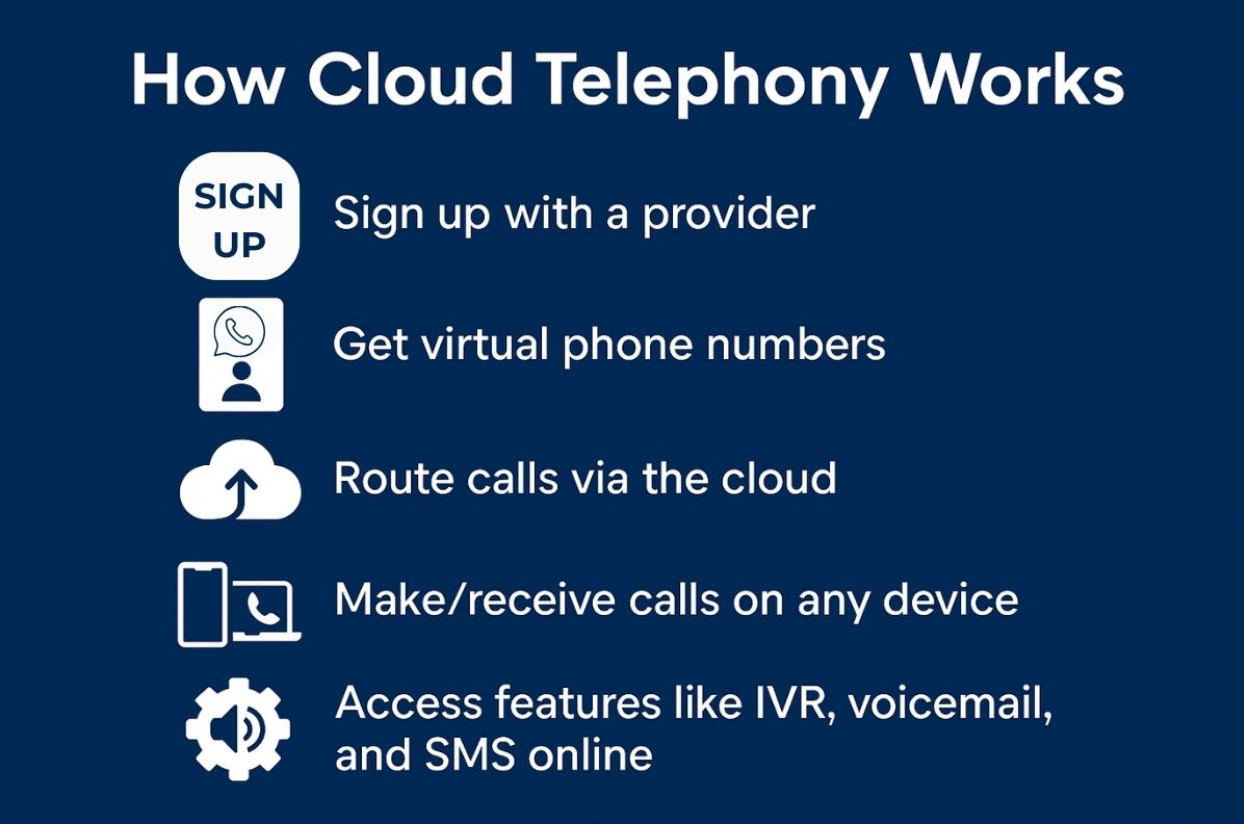
Here's how cloud telephony works in practice:
- A business signs up with a cloud telephony provider.
- The provider assigns virtual numbers and manages call routing from the cloud.
- Employees can make or receive calls using a laptop, smartphone, or IP phone.
- Features like call recording, IVR (Interactive Voice Response), voicemail, and SMS messaging are all integrated and managed online.
Unlike traditional phone systems, cloud telephony can scale up (or down) in minutes. Are you a startup? A multinational corporation? Anything in between?Cloud telephony adjusts quite easily to the size of your business, without extra hardware or tech headaches.
A Simple Example
Consider a business running a marketing campaign that wants to track responses. Instead of setting up multiple phone lines, it assigns a unique virtual number to the campaign. Every call gets tracked in real-time, with data available via dashboards or integrations, without the need for IT support.
What Does Cloud Telephony Mean for Businesses?
Understanding what cloud telephony means goes beyond the tech. It's about what it enables. It means flexibility, cost efficiency, and smarter communication.
With remote work now the norm, teams need to stay connected no matter where they are. Cloud telephony makes that happen without compromising on quality or security.
Here's what it unlocks:
- Global reach without global infrastructure – Businesses can operate with virtual numbers in multiple countries.
- 24/7 availability – Automated IVR, voicemail-to-email, and smart routing ensure no lead or support ticket goes cold.
- Easy integration – Platforms can connect with tools like CRM systems, ticketing software, or a messaging api for a unified workflow.
Different Types of Cloud Telephony Solutions
Not all platforms offer the same features. Choosing the right setup depends on use case, team size, and industry.
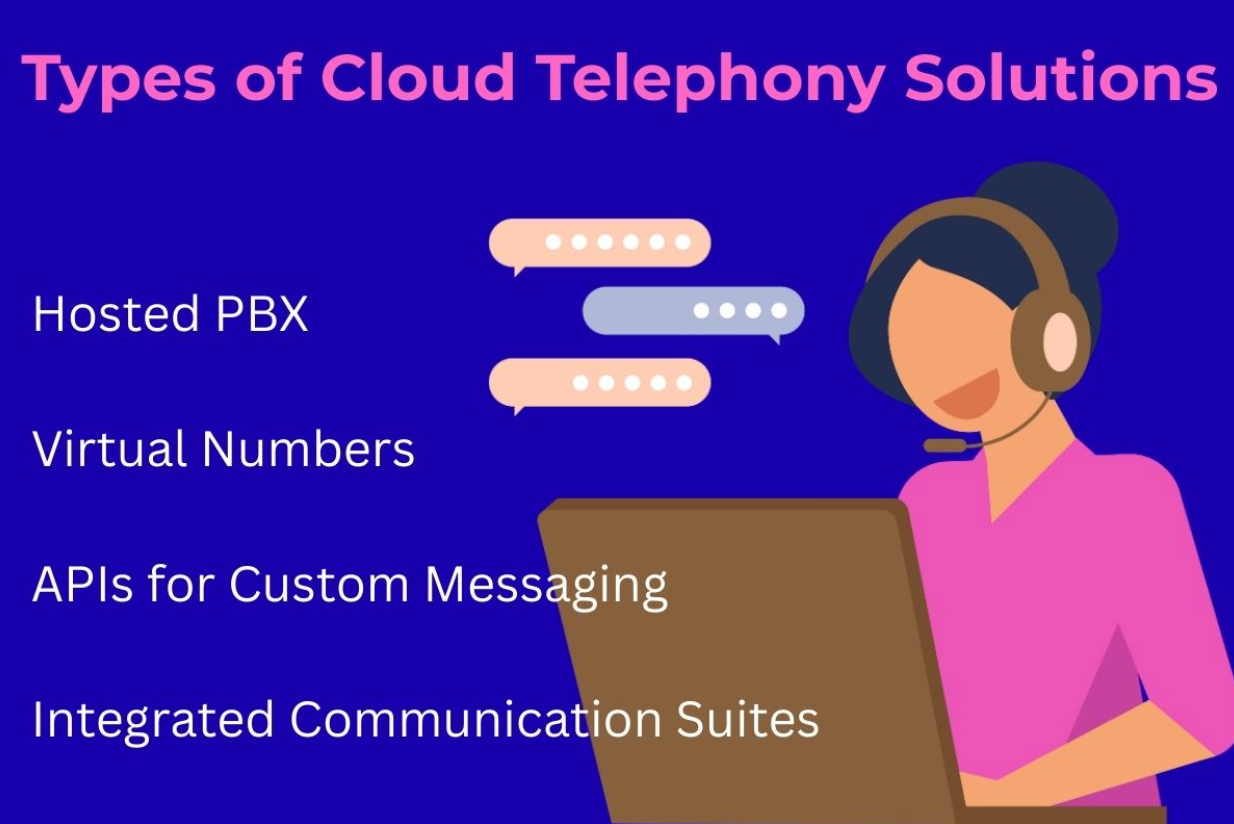
Hosted PBX
A hosted PBX (Private Branch Exchange) is a cloud-based alternative to on-site phone systems. It manages internal and external calling with added features like call queuing, extensions, and voicemail.
Virtual Numbers
Virtual numbers are tied to the cloud, not a physical device. They're perfect for support centers, regional marketing campaigns, and tracking customer inquiries.
APIs for Custom Messaging
Advanced users often tap into SMS API or WhatsApp API tools to automate messaging. For example, a delivery platform can use APIs to send real-time status updates via SMS or WhatsApp.
Integrated Communication Suites
Some platforms bundle everything — voice, messaging, analytics, and automations — into one dashboard. TopMessage is a strong example of this, offering full-scale solutions with deep customization options.
Why Cloud Telephony Is Replacing Traditional Systems
The question isn't just understanding what is cloud telephony solution — it's why cloud telephony has taken over legacy systems.
Traditional landline systems struggle with today's demands: They're expensive to maintain. They lack mobility. They can't easily integrate with digital tools.
Cloud telephony, on the other hand, delivers:
- Lower operational costs – No physical infrastructure means fewer setup and maintenance expenses.
- Faster onboarding – New hires can be live in minutes, not days.
Disaster resilience – Outages in one region don't take the system down. Calls can automatically reroute or trigger fallback messages.
Common Misconceptions About Cloud Telephony
A few myths still linger. Here's what businesses should know:
- Myth 1: It's only for large companies. Reality: Cloud telephony is ideal for small businesses, too. Pricing is usage-based, making it affordable at any scale.
- Myth 2: It's not secure. Reality: Reputable providers offer encryption, data redundancy, and compliance with standards like GDPR and HIPAA.
- Myth 3: It's just voice calling. Reality: Voice is only one piece. Cloud telephony also supports SMS, IVR, voicemail-to-email, analytics, and more.
What to Look for in a Cloud Telephony Solution
Before investing, it's worth asking the right questions:
- Is it scalable across teams and locations?
- Does it support integrations with CRM or helpdesk platforms?
- How reliable is uptime and call quality?
- Is support available in your time zone?
- Are analytics and reports easy to access and act on?
Here's a pro tip most people miss: Look for platforms that offer local number masking — especially for logistics, customer service, or any use case involving third-party agents. This protects customer privacy while maintaining a seamless call experience.
Final Thoughts: Is Cloud Telephony Right for You?
Any business that communicates with customers — whether through voice, SMS, or integrations — should seriously consider moving to the cloud. It's no longer a futuristic tool. It's today's standard.
Companies can start small. Test with a support line, sales number, or messaging API. Then expand into campaigns, remote team routing, or full-scale voice automation. Providers like TopMessage make it easy to try without a heavy setup.
Understanding how cloud telephony works isn't about flashy tech. It's about communication that actually works — wherever teams or customers are located.
FAQs
What does cloud telephony mean in simple terms?
Cloud telephony means using the internet to make and receive business calls instead of traditional phone lines. Everything runs on cloud servers — no on-site hardware or maintenance needed.
How cloud telephony works with remote teams?
Cloud telephony lets remote teams take calls on laptops, smartphones, or IP phones from anywhere. Calls are routed through the cloud, so everyone stays connected without needing to be in the same office or even the same country.
What is a cloud telephony solution best used for?
A cloud telephony solution is ideal for customer support centers, sales teams, marketing campaigns, logistics updates, appointment reminders, and any situation that involves high-volume or high-speed communication.
Why cloud telephony is more cost-effective?
There's no need for expensive infrastructure or on-site technicians. Businesses pay only for what they use, with the flexibility to scale up or down instantly. Most platforms also bundle features like call recording, IVR, and SMS, reducing the need for separate tools.
Can cloud telephony integrate with other business tools?
Yes. Most platforms support integration with CRM systems, helpdesks, and APIs like sms API, WhatsApp API, or full-scale messaging APIs. This allows businesses to automate communication, track customer interactions, and streamline workflows.