 Back to Blog
Measuring the ROI of SMS marketing starts with knowing exactly what you want those messages to achieve and proving they were delivered.
That proof might come in the form of sales, repeat orders, sign-ups, or other actions that matter to your business. Without a clear approach, even a successful campaign can look like a guessing game in the reports.
This guide walks through a straightforward way to calculate ROI and spot opportunities that numbers alone might miss.
Why ROI in SMS Marketing Matters (Even More Than You Think)
Every marketing dollar needs to justify its place in the budget.
The ROI for SMS marketing helps you understand whether the channel is profitable and how it stacks up against your other marketing efforts.
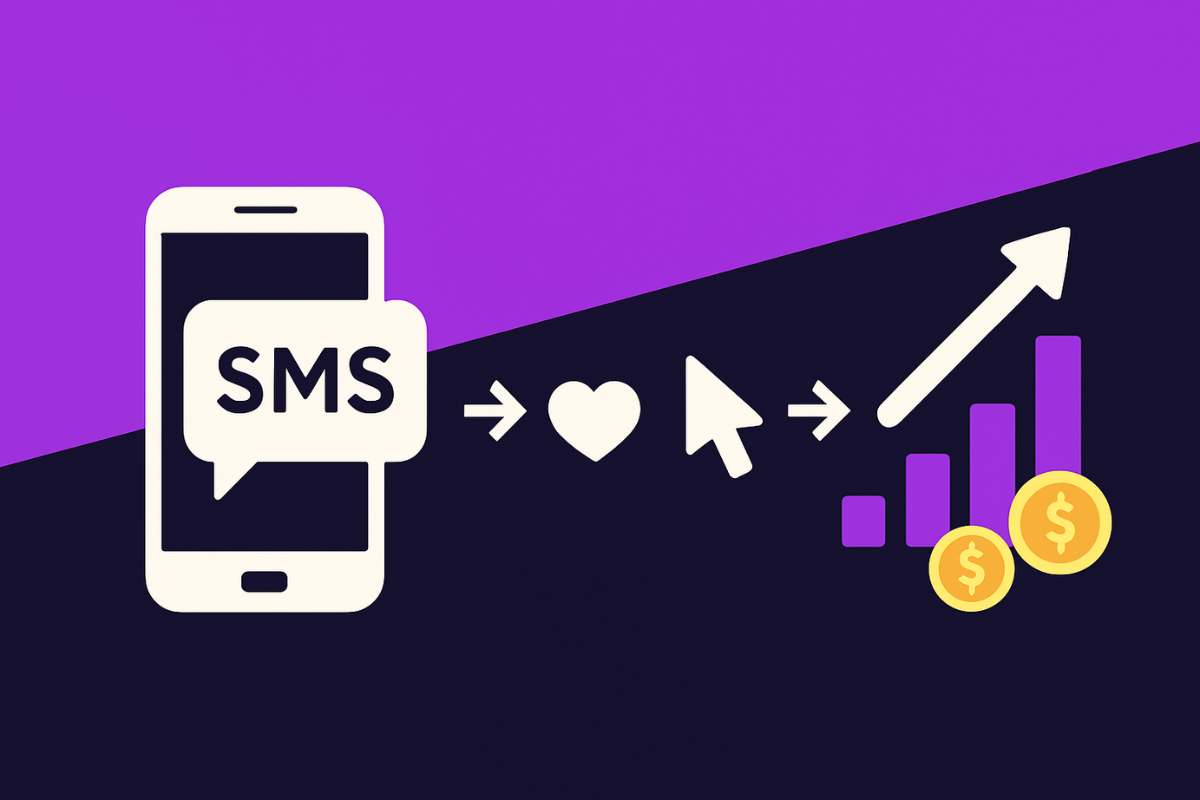
It’s not just about tracking revenue either. ROI in SMS marketing can also reveal:
- How effectively messages drive engagement.
- Whether your timing and targeting are working.
- Which customer segments respond best.
When measured correctly, ROI becomes a decision-making tool rather than a vanity metric.
Step 1: Define What “Return” Means for Your Business
For some companies, the return is pure revenue. For others, it might be customer retention, appointment bookings, or sign-ups for a loyalty program. Without this clarity, your ROI calculation will be meaningless.
For example:
- An online retailer may measure conversions from product promotions.
- A service business might track appointment confirmations.
- A nonprofit could focus on donation amounts from campaign links.
Don’t just measure short-term conversions. Instead, track “micro-conversions,” which are actions like clicking a link, using a coupon code, or responding to a survey. These often predict long-term customer value better than single purchases.
Step 2: Use the Right ROI Formula for SMS Marketing
The standard ROI formula is:
ROI (%) = (Net Profit / Cost of Campaign) × 100
So, with this in mind, your calculation might look like this:
- Net Profit: Sales directly attributed to your SMS messages, minus product or service costs.
- Cost of Campaign: SMS platform fees, list acquisition costs, and any creative or development expenses.
Let’s say your marketing campaign generated $10,000 in sales, with $6,000 in product costs and $500 in SMS costs. In that case, your ROI would be:
ROI = (($10,000 – $6,000 – $500) ÷ $500) × 100 = 700%
Step 3: Attribute Sales Accurately
One of the most common mistakes in calculating the ROI of an SMS marketing campaign is failing to connect the dots between a message and a purchase.
Use unique coupon codes for each campaign and also utilize UTM parameters in your SMS links to track performance in analytics tools.
Last but not least, multi-touch and last-click attribution models should also be taken into account to understand the full journey.
Step 4: Include Non-Monetary Gains

Some returns don’t show up immediately in your sales reports but still contribute to long-term profit. Below, you’ll find three main examples of these instances,
- Improved customer loyalty.
- Higher open and engagement rates compared to email.
- Faster feedback loops for product launches.
While these might not be part of your hard ROI calculation, they help justify investment and guide your strategy.
Step 5: Benchmark Against Overall SMS Marketing ROI Statistics
Benchmarking your performance isn’t the same thing as chasing someone else’s numbers. You need to understand if your results are competitive in your space.
The ROI can look very different for a retail brand compared to a B2B service provider. Factors like purchase cycles, audience demographics, and offer types all influence the final figures.
That said, having a general reference point helps you spot trends and opportunities. Below are widely reported ROI statistics, so you can use them as a baseline and then compare them with data from your own campaigns:
- ROI Potential – Many industries report returns of up to 8x for every dollar spent on SMS.
- Open Rates – Average 90–98%, making SMS one of the most consistently viewed channels.
- Click-Through Rates (CTR) – Often around 19%, far above typical email benchmarks.
- Conversion Rates – Commonly fall between 10–15%, depending on offer relevance and timing.
Treat these numbers as directional, not definitive. Your own ROI may outperform or lag behind depending on your targeting, creative, and follow-up.
The real insight comes from tracking your campaigns over time and comparing them to both these industry averages and your historical performance.
Step 6: Track Results Over Time
A single campaign’s ROI can be skewed by seasonality fluctuations, promotions, or audience mood. To get a reliable picture, make sure to measure ROI quarterly or annually. Comparing campaigns to see what works consistently is also highly recommended.
And, finally, the irreplaceable part of any marketing campaign - segmenting data by audience group, offer type, and timing. If you follow all of this, expect much smarter budgeting and better creative testing in future SMS marketing campaigns.
Additional Tips for Boosting ROI
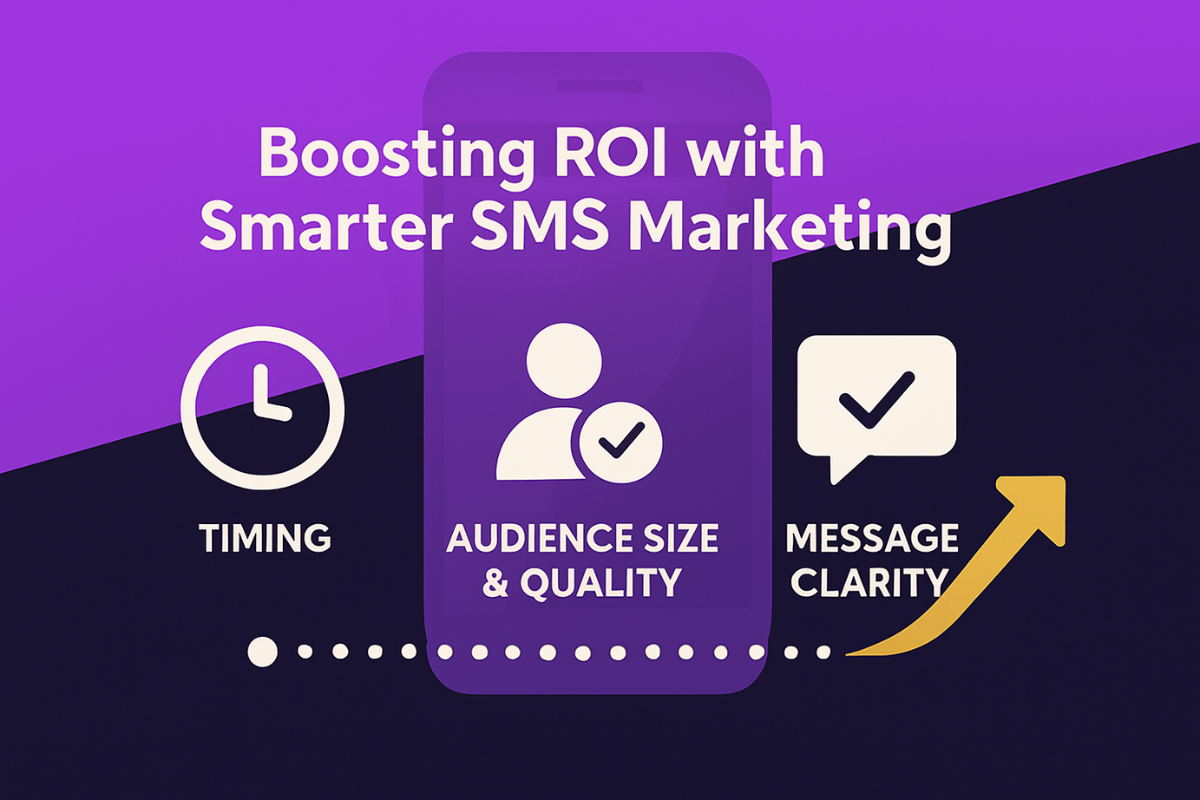
Before we wrap things up and switch over to the most commonly asked questions, we wanted to share a few extra things you need to keep in mind for consistent revenue growth and stable returns on investment.
- Timing: Campaigns sent at peak hours often generate higher returns.
- Audience size and quality: Bigger isn’t always better - engaged lists perform best.
- Message clarity: Short, actionable copy often drives more clicks.
If you run multiple campaigns in a year, maintain a central dashboard or spreadsheet to track each one’s performance. Pair this with your SMS inbox data to see how customers are responding beyond just clicking links.
Turning Measurement Into Growth
Accurately measuring the ROI of SMS marketing is the foundation for scaling results. By defining success, tracking conversions precisely, and benchmarking against general SMS marketing ROI statistics, businesses can benefit from both immediate and long-term value.
TopMessage makes the process easier by combining message delivery, tracking, and analytics in one platform, turning ROI insights into smarter, more profitable campaigns.
FAQs
What is a good ROI for SMS marketing?
While it varies by industry, many businesses see ROI exceeding 300%. Anything above your acquisition cost and alternative channel ROI is a positive indicator.
How long should I track SMS campaign results?
At least 30 days for sales-focused campaigns, but up to 90 days if you want to capture repeat purchases and customer lifetime value.
Can I measure ROI for SMS marketing without sales data?
Yes. Track engagement metrics like click-throughs, coupon usage, and survey completions to gauge performance when sales aren’t the immediate goal.
Does message length affect ROI?
Shorter, clear messages often convert better, but the offer’s relevance matters more than word count.
What tools can help with ROI in SMS marketing?
Look for platforms that combine delivery, link tracking, and analytics. Many also integrate with CRMs to connect SMS activity with sales data.