 Back to Blog
Messaging has become one of the most direct and personal ways to connect with customers (through SMS, WhatsApp, in-app notifications, etc.).
But sending messages alone doesn’t guarantee success. The difference between a campaign that drives results and one that falls flat often comes down to how success is measured.
Metrics turn intuition into strategy. They reveal whether customers are opening, engaging, or opting out + they highlight where improvements are needed.
So, analyzing KPIs for messaging properly (and knowing them is the obvious precondition) ensures that every message contributes to outcomes rather than adding noise.
Core KPIs for Messaging Campaigns
Not all metrics are created equal. Some show short-term performance, while others reveal long-term value. Here are the most critical ones:
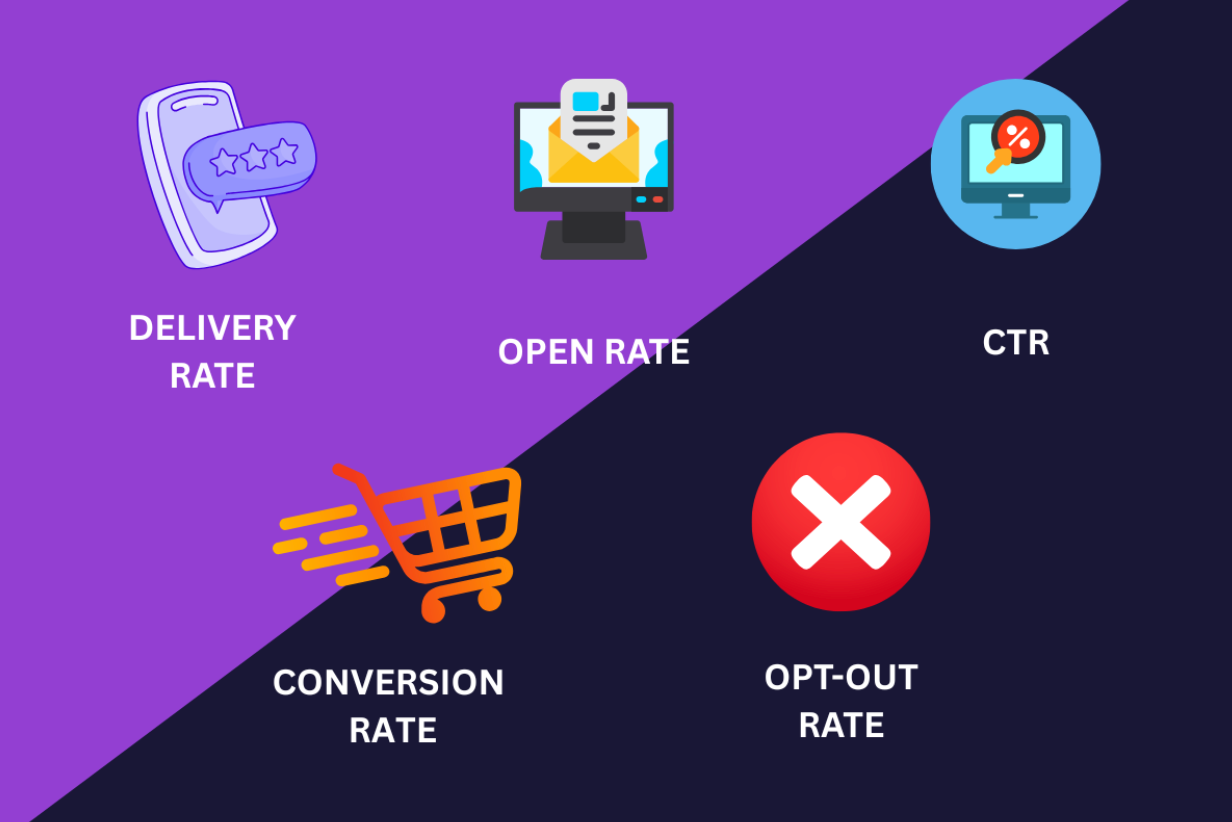
1. Delivery Rate
This measures how many messages actually reach recipients. If delivery rates are low, it could point to invalid numbers, carrier issues, or list quality problems.
2. Open Rate
SMS tends to have extremely high open rates, but poor timing or sender labeling can drag them down. A dip here signals a need for better testing and targeting.
3. Click-Through Rate (CTR)
CTR connects engagement with action. A campaign with strong open rates but low CTR may be interesting, but it isn’t motivating.
The difference between a basic effort and a successful SMS marketing campaign often lies in how well the content drives clicks.
4. Conversion Rate
This metric reveals whether messages lead to the desired outcome - purchases, sign-ups, or downloads. It’s also one of the most important KPIs for a marketing campaign because it links engagement directly to revenue.
5. Opt-Out Rate
Some unsubscribes are natural, but sudden spikes may point to over-messaging or irrelevant content. This is one of the key text messaging customer metrics signals since it reflects customer comfort and trust.
Going Beyond the Basics: Advanced Messaging Metrics
Once core KPIs are well understood, businesses can gain deeper insights by tracking advanced metrics that show long-term impact and customer behavior trends.
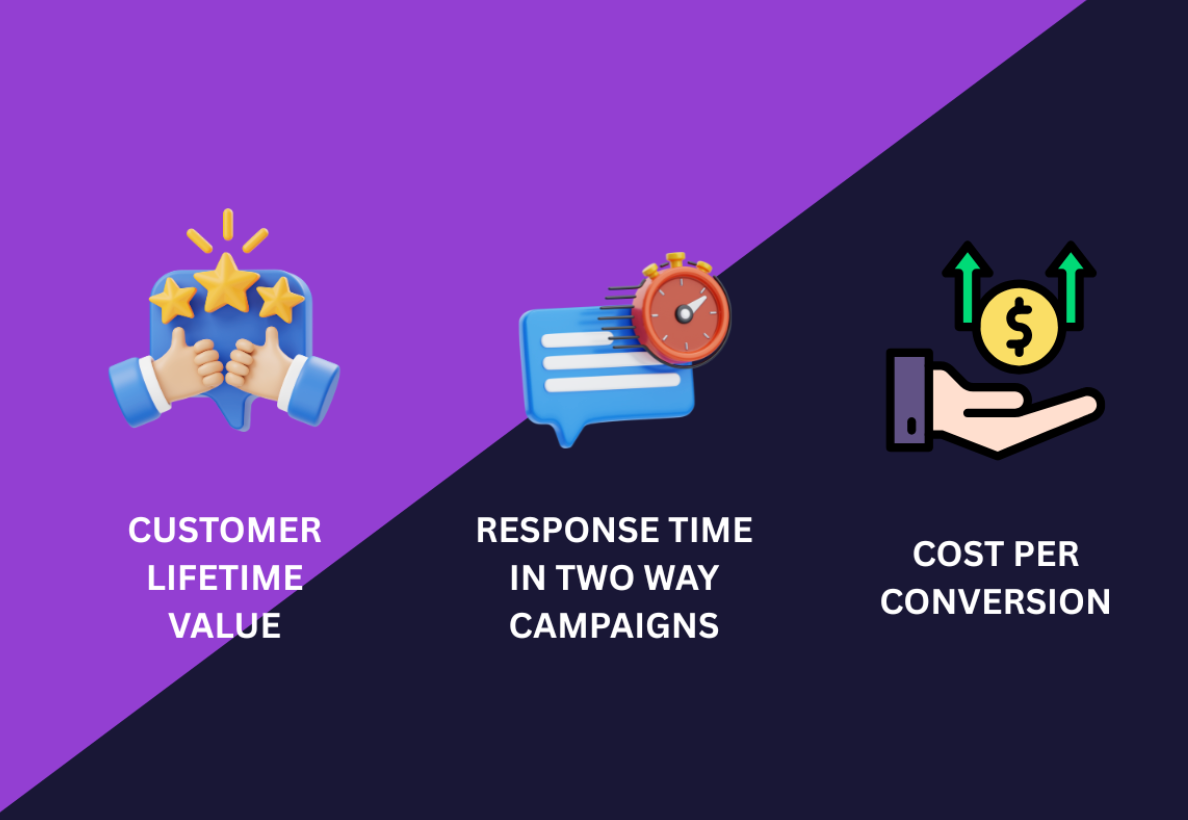
These metrics go beyond opens and clicks to reveal how messaging contributes to retention, engagement quality, and overall ROI.
Customer Lifetime Value (CLV) from Messaging
Understanding how messaging influences repeat purchases and retention creates a bigger picture. High CLV means campaigns aren’t just driving quick wins but also sustaining relationships.
Response Time in Two-Way Campaigns
In channels like WhatsApp, measuring how fast customers respond indicates how engaging your messaging is. Faster response times often show a stronger connection.
Cost per Conversion
Even though messaging is cost-efficient, evaluating cost per conversion is essential. This ties directly into broader key metrics for a marketing campaign analysis and helps allocate budget wisely.
Channel-Specific Metrics Worth Tracking
Different platforms require different measurements. With that in mind, let’s analyze how things work in various channels.
SMS Campaign Metrics
SMS offers instant delivery and quick customer reactions. Tracking SMS campaign metrics such as delivery, open rates, and opt-outs gives a reliable snapshot of effectiveness.
Over time, reviewing these numbers ensures SMS marketing campaigns stay fresh and valuable rather than overwhelming.
WhatsApp Metrics
WhatsApp provides richer interactions with media, quick replies, and conversational flows. With that in mind, WhatsApp metrics that you need to follow revolve around read receipts, reply rates, and engagement duration. Simply put, they are the best indicator of campaign quality.
Adding some additional success metrics for WhatsApp (like post-interaction satisfaction) helps businesses even further because it allows them to see if the channel fosters trust.
If your brand relies on interactive experiences, rest assured that WhatsApp marketing campaigns can outperform one-way communication.
In-App Messaging Metrics
In-app messages reach users already engaged with your product or service. Key metrics include click-through rates, feature adoption, and in-app conversions.
If you track these behaviors, you can find out how messaging impacts user retention and product usage patterns.
Push Notification Metrics
Push notifications are ideal for timely alerts and updates. Metrics like open rate, interaction rate, and uninstalls help assess whether notifications are adding value or creating friction.
Optimizing timing and personalization here can truly boost engagement without ever increasing churn.
Putting Metrics Into Action

Collecting data is only step one. Real impact comes from applying insights strategically.
- Benchmark results. Compare each campaign against previous ones to understand progress.
- Segment your audience. Tailored campaigns nearly always outperform one-size-fits-all blasts.
- Test timing. Customers don’t engage the same way at every hour. Testing can uncover your “sweet spot.”
- Balance frequency. Too many messages lead to opt-outs, while too few risk invisibility.
When tied to messaging app KPIs, these practices help create a cycle of ongoing optimization instead of guesswork.
Extra Advice: Track Silent Disengagement
Most teams measure opt-outs, but many overlook “silent disengagement.”
These are customers who stay subscribed but stop opening or clicking. They inflate your audience size but quietly hurt results. Monitoring and re-engaging this group ensures that KPIs for a marketing campaign remain accurate and campaigns continue to improve.
Turning Metrics Into Growth
A successful messaging campaign isn’t about how many texts you send - it’s about how well those messages drive meaningful results.
When you track the right KPIs for messaging, connect them to messaging app KPIs, and adapt strategies for SMS and WhatsApp, you most definitely improve both engagement and ROI.
If your business is ready to up your measurement efforts, TopMessage makes it possible for you to unify delivery, engagement, and conversion data in one place.
Turn raw numbers into smarter strategies and long-term growth.
FAQs
What’s a good benchmark for opt-out rates?
Typically, opt-outs fall between 1–2%. Higher rates suggest over-messaging or irrelevant offers.
How do messaging KPIs compare with email KPIs?
Messaging usually delivers much higher open and engagement rates than email, but the downside is that customers are less tolerant of poor timing or irrelevant messages.
Which KPIs should small businesses focus on first?
Delivery rate, CTR, and opt-out rate are the most important to track early on. Once stable, shift focus to conversion rate and customer lifetime value.
Are WhatsApp and SMS metrics interchangeable?
Not exactly. Some overlap exists, like CTR, but WhatsApp requires additional measures, such as engagement duration and satisfaction, since it’s more conversational.