 Back to Blog
When done right, an SMS drip campaign can be one of the most effective tools in modern marketing.
It’s fast, personal, and reaches customers where they’re most active - their phones.
Yet, many businesses still treat SMS as a one-off blast instead of a carefully structured journey. As a result, we have countless missed opportunities and disengaged audiences.
Understanding what separates high-performing business SMS drip campaigns from forgettable ones can make all the difference in engagement and conversions. Let’s break down what truly works, what doesn’t, and how to create campaigns that deliver measurable results.
What Is an SMS Drip Marketing Campaign?
At its core, an SMS drip marketing campaign is an automated sequence of text messages designed to nurture leads, onboard new users, or re-engage existing customers over time.
Each message “drips” out based on a schedule or triggered action like signing up for a newsletter, abandoning a cart, or completing a purchase.
Unlike single blasts, drip sequences follow a logic. They respond to user behavior, guiding recipients through a defined journey instead of overwhelming them with one big pitch.
The magic lies in timing and context - sending the right message to the right person, at exactly the right moment.
What Works: Principles Behind Successful Drip Campaigns
Every high-performing drip campaign follows a few timeless principles that balance automation with authenticity.
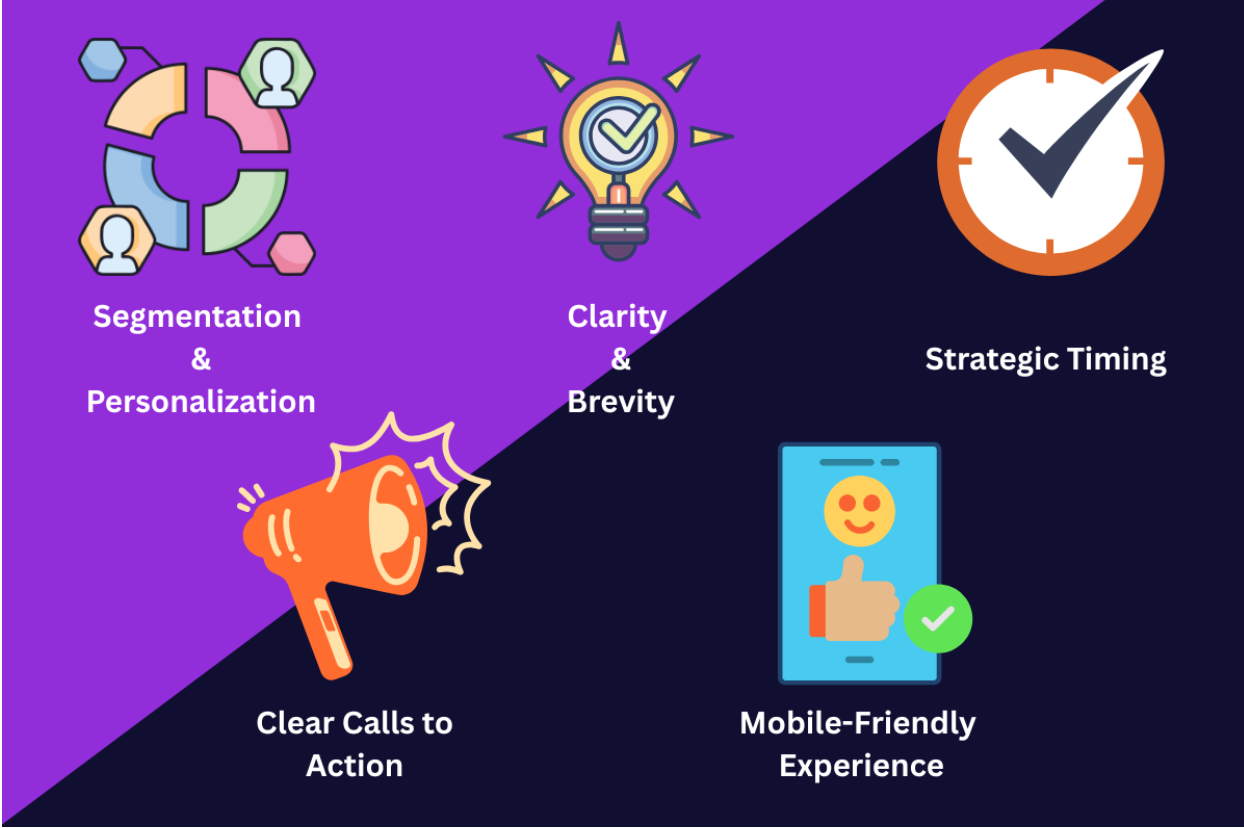
1. Segmentation and Personalization
Generic messages feel like spam. Effective SMS drip campaigns start with thoughtful segmentation, which translates to grouping contacts by behavior, demographics, or engagement level.
Personalization goes beyond inserting a name. It’s about tailoring content to where someone is in the customer journey. For example:
- A first-time visitor might get a friendly welcome series.
- A repeat customer might receive loyalty incentives.
- An inactive user might be re-engaged with a special offer or update.
When the message feels relevant, recipients are more likely to respond or at least keep reading.
2. Clarity and Brevity
Texting is an art of precision. The best messages say a lot in very few words.
Aim for clarity, not cleverness. Every SMS should make one simple point, whether that’s introducing a product, offering a discount, or confirming an order.
Avoid jargon and filler. The reader should understand your message at a glance, even if they’re checking their phone in line at a café.
3. Strategic Timing
Drip sequences depend on timing. Messages that arrive too frequently feel intrusive; those that come too late lose momentum.
A balanced drip SMS campaign typically follows a rhythm:
- Message 1: Immediate acknowledgment (e.g., thank you or welcome)
- Message 2: Education or introduction within 24-48 hours
- Message 3: Value offer or action nudge after a few days
- Message 4: Re-engagement if the user hasn’t responded
Testing intervals is of the utmost importance. However, bear in mind that the ideal timing varies by industry and audience habits.
4. Clear Calls to Action
Every text should have a purpose and that purpose should be obvious. Whether it’s “Shop Now,” “Confirm Appointment,” or “Learn More,” a clear CTA directs recipients without friction.
Think of it as guiding, not pushing. The goal isn’t to sell in every message but to move users smoothly along the conversion path.
5. Mobile-Friendly Experience
A polished SMS campaign loses power if the landing page it leads to isn’t optimized for mobile. The user journey should feel seamless all the way from the very first SMS to the click to the checkout. That means:
- Fast-loading pages
- Simple, tappable CTAs
- Short forms and minimal friction
A mobile-first mindset is no longer optional; it’s the foundation of every successful SMS marketing campaign.
What Doesn’t Work: Common Drip Mistakes to Avoid
Small missteps (like poor timing or lack of data awareness) can quickly turn a strong strategy into background noise. Understanding what not to do is just as important as knowing what works, especially when your goal is long-term engagement instead of short-term attention.
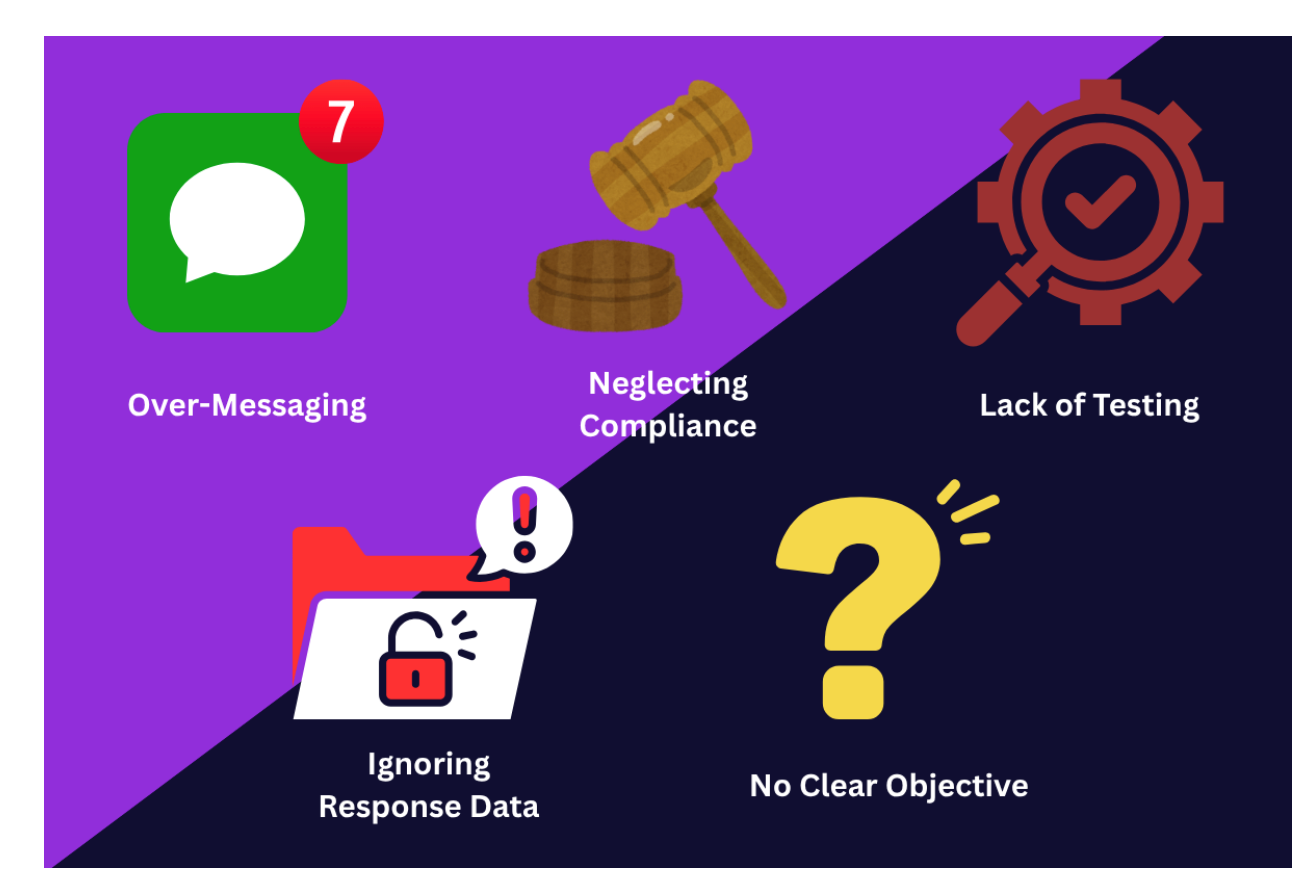
1. Over-Messaging
Too many texts too soon can destroy trust. If customers feel bombarded, they’ll unsubscribe, or worse, block your number entirely.
Space out messages intentionally, and give recipients a chance to engage before sending another. Remember: anticipation works better than repetition.
2. Neglecting Compliance
SMS marketing comes with strict rules. Failure to include opt-out instructions or ignoring consent requirements can lead to hefty penalties. Always make sure your messages comply with regulations like TCPA, GDPR, and carrier-specific policies.
3. Lack of Testing
Guesswork is the enemy of optimization. If you’re not A/B testing your SMS drip campaign, you’re leaving performance gains on the table.
Experiment with:
- Timing and frequency
- Message tone or structure
- CTA placement
Small adjustments can lead to big differences in response rates.
4. Ignoring Response Data
Drip campaigns shouldn’t be “set and forget.” Monitor delivery rates, click-throughs, and replies from your SMS inbox. Use these insights to adjust your sequence and improve targeting.
Remember, automation without iteration is just noise.
5. No Clear Objective
Some brands launch SMS sequences without a defined goal. Is it to nurture leads? Drive sales? Collect feedback? Without clarity, your messages lack focus and consistency.
Every drip series should serve one specific purpose, and every text should support that objective.
SMS Drip Campaign Examples That Deliver Results

A health/benefits program used a text-message drip marketing campaign with targeted messages about recertification, nutrition education, and program awareness.
Compared to a similar agency not using the program, WICBuzz achieved 6.7% higher recertification, 7.4% higher retention, and 10.9% higher participation.
The Chesterford Group: Re-Engagement for E-Commerce
A UK shop re-engaged lapsed customers (those who hadn't purchased in over 5 weeks) by sending a simple reminder SMS. The results: ~£4,939 in extra revenue from 208 reactivated customers - all from one inexpensive campaign (£148 cost, 5,119 texts).
Industry Benchmark Performance
Across many e-commerce businesses, top SMS campaigns outperform average campaigns significantly.
For example, top-performing campaigns deliver roughly 7× revenue per recipient (RPR) compared to average campaigns. Average conversion/click/order metrics vary heavily by industry, but even modest segmentation and automation tend to boost results.
Pro Tip: Use “Behavioral Delays” for Natural Flow
Most marketers set fixed intervals between messages. But the most advanced business SMS drip campaigns use behavioral delays, meaning messages trigger only when users take or skip an action.
For instance, instead of sending a follow-up two days after signup, send it only when the user hasn’t opened or clicked the first text. This is among the best examples of a text message that converts as it creates a natural rhythm and prevents unnecessary interruptions.
This technique feels personalized and respectful, like a conversation, not a broadcast.
Integrating SMS Drips Into Broader Marketing
Your drip SMS campaign shouldn’t exist in isolation. The best-performing sequences integrate with email, social media, and CRM workflows to form a consistent brand experience.
For example, pairing SMS marketing campaigns with retargeting ads or email follow-ups can reinforce your message across channels, ensuring customers stay connected without feeling overwhelmed.
Building Smarter Drip Campaigns with TopMessage
An effective SMS drip campaign is a true relationship builder. It respects timing, personalization, and user intent, delivering real value at every stage.
For businesses seeking smarter automation, TopMessage offers intuitive tools for building, scheduling, and tracking drip sequences that actually engage.
The result? Messages that feel personal, campaigns that perform, and customers who stay connected.
FAQs
How long should a typical SMS drip campaign last?
Most campaigns run between 5-10 days, though the ideal duration depends on the goal and audience. Longer journeys work best for onboarding or educational sequences, while shorter bursts suit promotional offers.
Can drip campaigns work for small businesses?
Absolutely. In fact, smaller brands often see higher engagement because they can craft more personal, direct communication.
How many messages are too many?
As a rule of thumb, avoid sending more than 3-4 messages per week unless it’s part of an active engagement flow (like event updates or flash sales).
What metrics define a successful drip sequence?
Look at click-through rates, response rates, and opt-out percentages. A healthy campaign shows steady engagement without rising unsubscribes.
Are SMS drips effective for B2B audiences?
Yes, especially for event reminders, lead nurturing, and post-demo follow-ups. B2B recipients appreciate concise updates that respect their time.