 Back to Blog
The buying journey is rarely a straight line. Leads often need multiple touchpoints before they’re ready to make a decision, and each interaction plays a role in shaping their trust and interest.
Lead nurturing messages facilitate this process a lot. Even though they are often interpreted as pushing for an immediate sale, they actually build relationships from awareness to action.
The right sequence of messages can transform lukewarm prospects into loyal customers. However, at the same time, the wrong approach (overloading inboxes, sending irrelevant updates, or ignoring opt-out preferences) can just as quickly push leads away. So, without further ado, let’s see how to approach it the right way.
The Foundation of High-Performing Messages
Before diving into specific strategies, it’s worth outlining what makes a nurturing message effective in the first place:
- Personalization: Messages that reference past behavior, preferences, or context resonate more deeply.
- Value over volume: Quality beats frequency. Every touchpoint should give the lead something useful.
- Clarity of purpose: Each message should have a clear goal—whether it’s driving engagement, educating, or leading toward conversion.
Crafting Messages That Build Trust
Building trust through messaging is less about clever copy and more about showing a genuine understanding of your audience. The best lead nurturing messages create a sense of value and respect while steadily guiding prospects toward a decision.
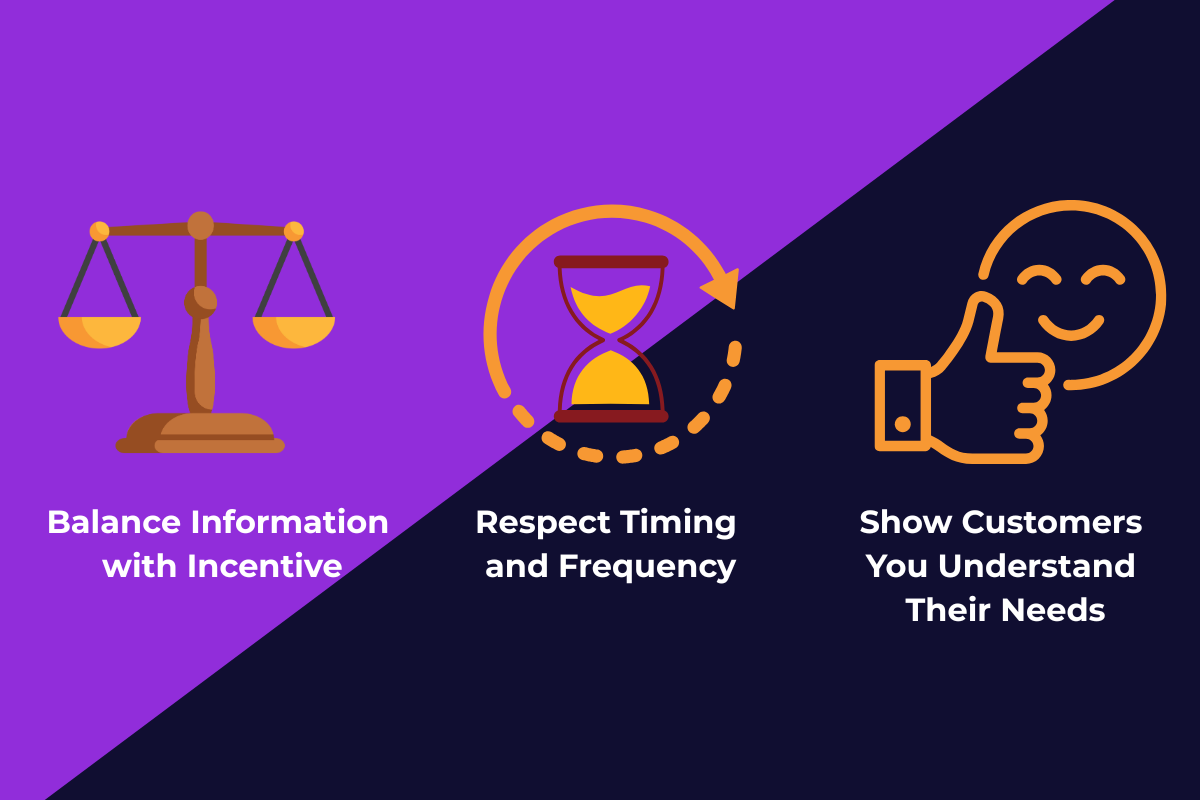
Balance Information with Incentive
Leads don’t want constant sales pitches. A good nurturing message mixes education and gentle persuasion. For instance, a software company might share a quick productivity tip while highlighting how its tool streamlines the process.
Respect Timing and Frequency
Too many messages too quickly can cause fatigue, while long gaps can result in cold leads. The cadence depends on the product’s buying cycle, but consistency is key. Automated workflows make it easier to maintain regular communication without overwhelming leads.
Show You Understand Their Needs
Segmentation is the hidden engine of lead nurturing. By grouping leads based on behavior or demographics, you can tailor messages that speak directly to their situation.
This is one of the most effective ways to write marketing text messages that convert because relevance naturally drives response.
Choosing the Right Channels
Different leads prefer different communication styles. While email remains a staple, newer formats are playing a bigger role.
- SMS marketing campaigns: Great for time-sensitive offers or reminders, where immediacy matters.
- In-app notifications: Useful for SaaS platforms looking to drive product adoption.
- WhatsApp marketing campaigns: Perfect for brands that want two-way, conversational engagement.
The rule of thumb is to just test and consistently analyze performance across channels.
If you do this, you will be much closer to being able to create a successful SMS marketing campaign or adapt WhatsApp flows for maximum impact.
Write Lead Nurturing Messages That Convert in 4 Steps
Now to the core question: how do you write messages that move the needle?
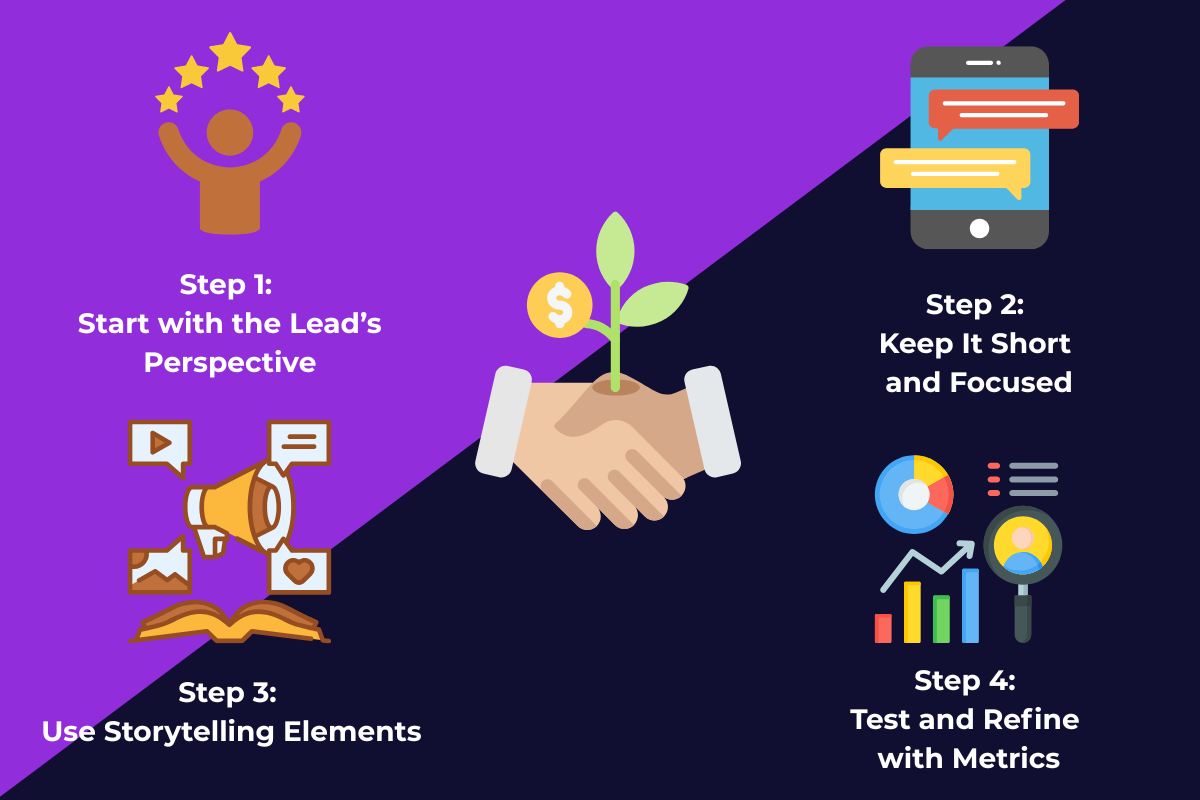
1. Start with the Lead’s Perspective
Every message should begin by asking: What does this person need right now? Leads at the awareness stage might need education, while those closer to purchase may respond better to urgency or incentives.
2. Keep It Short and Focused
Attention spans are shrinking. Whether it’s a text, email, or push notification, cut unnecessary words. A clear, compelling call-to-action should be easy to spot.
3. Use Storytelling Elements
Stories humanize brands. Instead of simply stating product features, show how another customer solved a similar problem. These micro-stories make abstract benefits more tangible.
4. Test and Refine with Metrics
Conversion rates, click-through rates, and opt-out patterns provide crucial feedback. Measuring these consistently helps refine strategy, so no matter how your campaign is doing, you should always keep one eye on key metrics.
Examples of Effective Lead Nurturing Messages
Knowing the principles is one thing, but seeing them applied brings the ideas to life.
Below are a few sample messages across different contexts to illustrate how nurturing works in practice.
Example 1: Educational Email for Early-Stage Leads
"Struggling to keep your projects on track? Here’s a 2-minute guide to prioritizing tasks that top teams use every day. Ready to simplify your workflow? [Read More]"
Why it works: It offers immediate value (education) without pushing for a sale, while still inviting the lead to engage further.
Example 2: SMS Reminder for Mid-Funnel Engagement
"Hi Sarah, your free trial ends in 2 days. Unlock all premium features with 20% off your first 3 months. Redeem here: [short link]"
Why it works: It’s short, relevant, and time-sensitive. Perfect for SMS, where brevity is essential.
Example 3: Personalized Follow-Up After a Webinar
"Thanks for joining yesterday’s webinar! Here’s a case study on how companies like yours solved challenges we discussed."
Why it works: It acknowledges the recipient’s participation, personalizes the follow-up, and moves them closer to conversion by showing real-world proof.
Example 4: Loyalty Nurturing Message
"You’ve been with us for a year - thank you! As a token of our appreciation, here’s early access to our new feature before anyone else gets it."
Why it works: It rewards loyalty, builds goodwill, and increases the chance of referrals or upsells.
Time-Sensitive Personalization Strategy and Why It’s Relevant

While very frequently overlooked, one tactic you should most definitely incorporate is aligning lead nurturing messages with timing triggers.
For example, sending a personalized discount around the anniversary of a customer’s sign-up date, or following up after a webinar within 24 hours, can dramatically improve conversion rates.
Good timing is about catching attention when intent is highest, and if you master that skill, the sky is the limit.
Wrapping It Up: Turning Messages into Conversions
Effective nurturing is about empathy, strategy, and data. Once you understand the needs of your customer and learn to fully respect their preferences, you’ll be able to turn casual interest into meaningful engagement so easily.
Brands that know how to write lead-nurturing messages will inevitably succeed in building trust at every touchpoint. And after all, that trust is the foundation of conversion.
Finally, you can always consider partnering up with platforms like TopMessage. We provide the tools to craft, automate, and measure nurturing sequences across channels, ensuring every lead is guided with respect and precision.
FAQs
How often should lead nurturing messages be sent?
It depends on the buying cycle. A B2C purchase may only need a few touches over a week, while a B2B deal could stretch across months. The key is consistency without overloading.
Can SMS really work for nurturing, not just promotions?
Yes. When used thoughtfully, SMS can deliver educational bites, reminders, or exclusive offers that support relationship building.
What’s the best length for a nurturing message?
Short enough to be read at a glance, but long enough to provide clear value. For SMS, under 160 characters is ideal. For email, 3–5 short paragraphs often work best.
Should every message have a CTA?
Not always. Some nurturing messages should simply provide value or insights. But within a sequence, at least half should guide the lead to take the next step.