 Back to Blog
Messaging services remain an integral form of communication between customers and businesses due to the rise in the mobile customer base. We often get the question, What is the difference between RCS and SMS? Some businesses wonder if they should continue using SMS services or make the switch to RCS (Rich Communication Services). TopMessage will explain what differentiates SMS from RCS in addition to their various benefits, to make an educated decision that is best aligned with your business marketing and customer engagement objectives.
What is RCS vs SMS?
Advanced Communication Services (ACR) is the default text messaging protocol that is universally compatible with nearly every mobile device and doesn't require mobile data to send or receive. RCS, on the other hand, is an upgraded messaging service that offers and enables a number of richer messaging features that include, but are not limited to, read receipts, images, appointment and payment cards, suggested and automated replies, and many others, which are scanned and processed effortlessly from text to messaging thread.
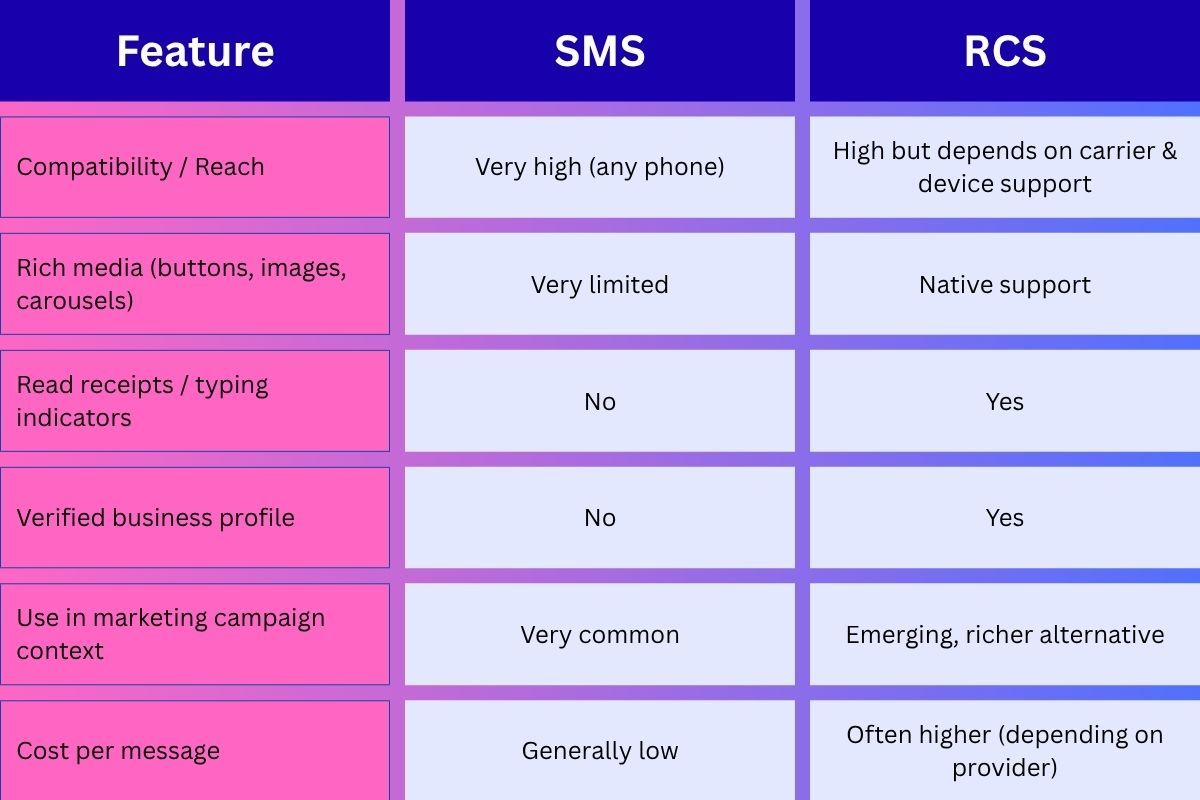
When comparing RCS and SMS services, the difference in capabilities is interactivity. With SMS being a far more universal service, businesses often wonder whether the switch to RCS is worth the cost. It comes down to a matter of preference, broad reach vs advanced features.
Why RCS Matters
In the context of the digital age, what was considered a classical SMS service is now a Rich Communication Service (RCS) Messaging. WIS is an upgraded communication service that incorporates a variety of features that help transform plain and mundane communication into something more sophisticated, branded, and trackable. RCS offers features that are upgrades to regular classical SMS:
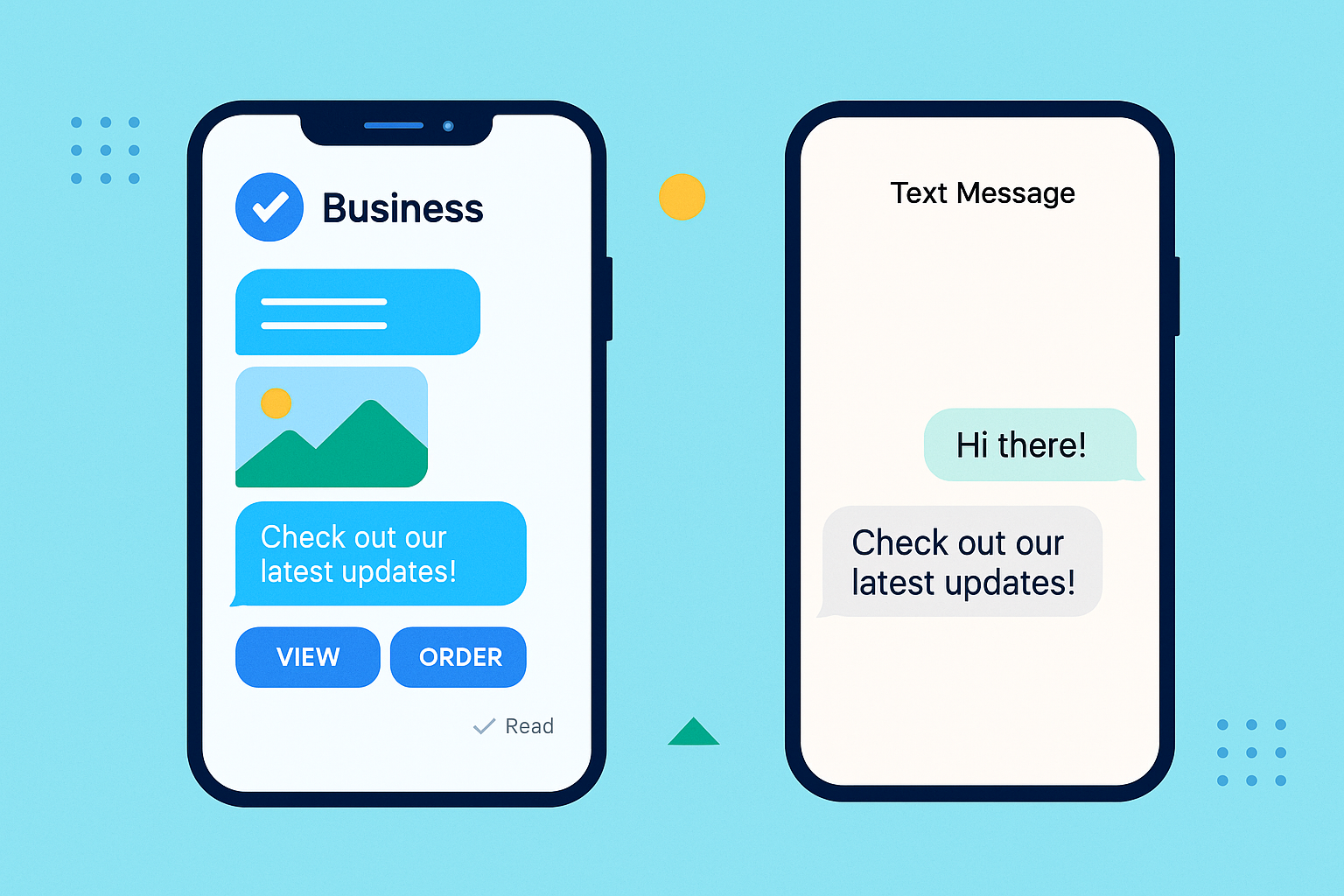
- Enhanced Interactivity - With RCS, businesses can send message carousels, embed buttons, allow quick replies, display images or maps inline, or even embed mini-apps. In contrast, SMS remains limited to plain text or basic MMS on some carriers. Thus, RCS vs SMS in terms of richness strongly favors RCS.
- Richer Branding & Trust - Because RCS supports verified business profiles and branding (logo, name, etc.), customers gain confidence in the message source. SMS lacks such branding control, which sometimes increases suspicion of spam.
- Better Insights & Analytics - RCS allows tracking of message read receipts, response actions, and even conversation flows. This depth of insight is harder to get from SMS, where often you only know if a message was delivered.
- Universal Reach of SMS - Despite RCS’s richness, SMS still has the advantage of universality. Everyone with a mobile phone can receive SMS, even non-smartphones and devices with no data plan. That’s why many marketing efforts still rely on SMS marketing campaigns as a backbone.
Practical RCS vs SMS
In practice, businesses do the most of RCS and SMS. RCS is used when there is enhanced content, and is used SMS is used as a backup when RCS is not supported. This way, both coverage and enhanced interactivity are achieved. To simplify managing both the channels, your messaging stack can integrate SMS API, with sending SMS and RCS, but it depends on the recipient capabilities of the SMS API. Also, providing your team with a common SMS inbox or messaging hub really helps track all conversations.
How to Ask Customers with RCS or SMS
When you send outreach or feedback requests, the difference in format is subtle but meaningful. Here are some best practices:
- Keep the message short and clear.
- In RCS, use quick reply buttons (e.g. “Excellent / Good / Poor”).
- In SMS, ask for a simple numeric or word reply.
- Personalize with the customer’s name or order number.
- Reference something the customer just did (purchase, support call, delivery) to make the ask timely.
For example:
- SMS version: “Hi Anna, thanks for your order #12345. Reply 1–5 how your experience was.”
- RCS version: same text plus reply buttons and an image of the purchased item.
This shows how RCS vs SMS message framing can look in practice.
Why Businesses Care About RCS vs SMS
Nowadays, businesses need to have timely, smooth, and relevant communication. Simplicity and reach made SMS the best option in the past, but as consumers evolve and expect more, interactive messaging is a necessity. RCS provides capabilities that previously would have required external apps or web forms. RCS vs SMS is a conversation on how businesses are improving in their communication with consumers.
However, sms is still very relevant (and crucial) to many businesses, as RCS support still isn't 100% everywhere. Many businesses are using a hybrid approach, sending RCS where supported and reverting to SMS where RCS is not supported.
How to Ask for Feedback With Examples
Here are practical examples (SMS or RCS) you can use to prompt customers:
- Post-Purchase Feedback SMS: “Thanks for your order, [Name]. Reply 1–5 to rate your experience.” RCS: same text + buttons (“5 ★”, “3 ★”, “1 ★”), and thumbnail of product.
- Customer Service Survey SMS: “How was our support today? Reply with Good, Neutral, or Poor.” RCS: include reply buttons and maybe a “Tell us why” field.
- Delivery Follow-Up SMS: “Your package arrived. Rate delivery 1–5.” RCS: include map pin, image of shipment, quick reply options.
- Loyalty Engagement SMS: “We value your input. What one thing can we improve?” RCS: same, plus reply suggestions (“Faster shipping”, “Better support”, etc.)
These examples demonstrate how to ask for feedback from customers in both formats, making it easier for respondents and more actionable for you.
The future of SMS and RCS lies before you
The RCS vs SMS debate is not a question of RCS vs SMS. It is a matter of using each communication channel where it performs best. SMS is the foundation of universal communication, while RCS has the modern features of interactivity that customers are looking for. SMS and RCS together balance reach & engagement. For businesses that concentrate on customer connection and retention, that is a must. End SMS and RCS marketing, promotions, confirmations, and feedback requests, and you can ensure your brand stays relevant and engaged for the digital comms future.
FAQs
What is the difference between RCS and SMS?
The difference between RCS and SMS is that SMS is a simple, universal text messaging protocol, whereas RCS adds rich media, interactive features, read receipts, and other capabilities beyond plain text.
What is RCS vs SMS message capability?
An RCS vs SMS message comparison shows that RCS supports images, quick replies, buttons, and business profiles. SMS is limited to basic text (and sometimes MMS) with no interactivity.
Why should a business care about RCS and SMS?
Because customers expect seamless interactions. RCS offers modern, app-like messaging inside standard chat threads, while SMS keeps universal reach. Using both ensures your messages connect reliably and compellingly.
Can every customer receive RCS messages?
Not always. RCS support depends on the carrier, device, and regional rollout. If RCS isn't supported, the system should fallback to SMS to ensure delivery.
How do I integrate RCS and SMS into my system?
You’d use an SMS API that supports sending SMS when RCS is unavailable and RCS when it is, managing both channels smartly. A unified messaging platform, or SMS inbox, helps your team handle conversations seamlessly.
Are SMS marketing campaigns still relevant if I use RCS?
Yes. Because RCS doesn’t yet reach everyone, SMS remains vital for broader coverage. Many brands run SMS marketing campaigns alongside RCS initiatives, so no customer is left out.
What costs are associated with RCS vs SMS?
RCS messages often cost more per message than standard SMS, due to the richer features and infrastructure required. However, the additional interactivity and engagement potential often justify the extra expense.